Explain the Fundamental Difference Between Symmetric and Asymmetric Encryption
Asymmetric cryptography may be more advanced than symmetric cryptography but both are still in use today and many times they get used in tandem. This difference is due to the various ways in which each scheme implements the principles of cryptography.

Symmetric And Asymmetric Ciphers A Comparison Keystrokes
It uses two different keys to encrypt messages.

. Tasks of the operating system are done by master processor. The execution of asymmetric encryption algorithms is slower as compared to the symmetric encryption algorithm. Symmetric-key confirms senders identity by knowing who can encrypt the message or decode the message.
Symmetric Key Cryptography. You currently have 200 in the bank which pays a 5 pa Apples currently cost 1 each at the shop and the inflation rate is -6 pa note the negative sign which is the expected growth rate in the apple price. Asymmetric encryption is also known as public-key encryption.
Additionally if hackers know a users key they can. The fundamental difference that distinguishes symmetric and asymmetric encryption is that symmetric encryption allows encryption and decryption of the message with the same key. While each has specific uses a robust communications encryption solution will typically implement all three.
When both symmetric key and asymmetric key cryptography are combined it most likely follows this methodology. Lets explore each of these encryption methods. Key Differences Between Symmetric and Asymmetric Encryption Symmetric encryption always uses a single key for encryption and decryption of the message.
Symmetric encryption is a method of encryption where electronic communication is twain encrypted and decrypted using just one key a hidden key. In Public key cryptography two different but mathematically related keys are used. One person encrypt the message with his private key and send that with public key.
The basic difference between these two types of encryption is that symmetric encryption uses one key for both encryption and decryption and the asymmetric encryption uses public key for encryption and a private key for decryption. Symmetric Key Cryptography or Symmetric Encryption uses a secret key for both encryption and decryption. Two common encryption types are the symmetric and asymmetric encryption.
Asymmetric encryption is more secure but is much slower to use than symmetric encryption. What is the fundamental difference between symmetric and asymmetric encryption. Symmetric cryptography is vulnerable to attacks that include brute force chosen plaintext and known plaintext as well as differential and linear cryptanalysis.
What is the difference between symmetric and asymmetric encryption. Symmetric key cryptography involves encryption methods where both the sender and the receiver share the same key used to encrypt the data. And only the person with another private key can.
On the other hand asymmetric encryption uses the public key for the encryption and a private key is used for decryption. Asymmetric-key confirms the senders identity by double the encryption. Only the encrypted data is exchanged and the public key is available for anyone.
Difference between Symmetric and Asymmetric encryption. Difference Between Asymmetric and Symmetric Multiprocessing. Two big trade-offs exist between symmetric and asymmetric cryptography.
Uses two keys one for encryption and the other for decryption. The most fundamental difference between symmetric and asymmetric encryption can be summed up simply. The public key and the private key.
Symmetric encryption uses a private key to encrypt and decrypt an encrypted email. Symmetric and asymmetric encryption algorithms each have different vulnerabilities. This approach is the inverse of Asymmetric Encryption which uses one key to encrypt and another to decrypt.
In symmetric multiprocessing all the processors are treated equally. The plaintext is encrypted to ciphertext utilising symmetric encryption to make use of speed. Symmetric encryption is different because it uses only one key to encrypt and decrypt messages.
Encrypted data and keys are exchanged. Thats because each approach comes with advantages and disadvantages. It requires just one key to help with both encryption encoding and decryption decoding of confidential data.
Asymmetric encryption is used for keys exchange used for symmetric encryption. In other words by knowing who has the key. Difference Between Symmetric and Asymmetric Encryption.
The process of exchanging keys in asymmetric. Then if the recipient wants to decrypt the message the recipient will have to use hisher private key to decrypt. Two of the widely used encryption methods are Symmetric Key Encryption and Public Key Encryption.
Asymmetric encryption uses the public key of the recipient to encrypt the message. Asymmetric cryptography is subject to brute-force and man-in-the-middle attacks. 7 rows In Symmetric-key encryption the message is encrypted by using a key and the same key is used to.
Symmetric encryption uses a single key for encryption and decryption while asymmetric encryption uses two different keys for encryption and decryption. A fundamental topic of IT security that often gives people difficulty is understanding the difference between symmetric asymmetric encryption and hashing. Compare symmetric and asymmetric encryption schemes and discuss under what circumstances a distributed system would use one or the other.
In asymmetric multiprocessing the processors are not treated equally. Uses One key for encryption and decryption. The key must be shared between individuals communicating through symmetric encryption so that it can be utilised in the procedure of decryption.

Difference Between Symmetric And Asymmetric Encryption Difference Between

Difference Between Symmetric And Asymmetric
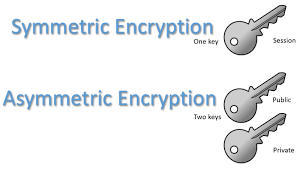
Symmetric Vs Asymmetric Encryption Difference Explained


Comments
Post a Comment